
Complete Guide to Keeping African Grey Parrots | How to Care for and Manage the Health of Highly Intelligent and Sensitive African Grey Parrots
African Grey Parrots are medium-sized parrots native to Africa, known for their high intelligence (often described as being “comparable to a 5-year-old human child”) and long lifespan of 40 to 60 years. This is a complete guide to raising an African Grey Parrot healthily and for a long time, covering everything from diet and cage environment to preventing hypocalcemia, managing feather plucking, and training.
What kind of bird is an African Grey Parrot?
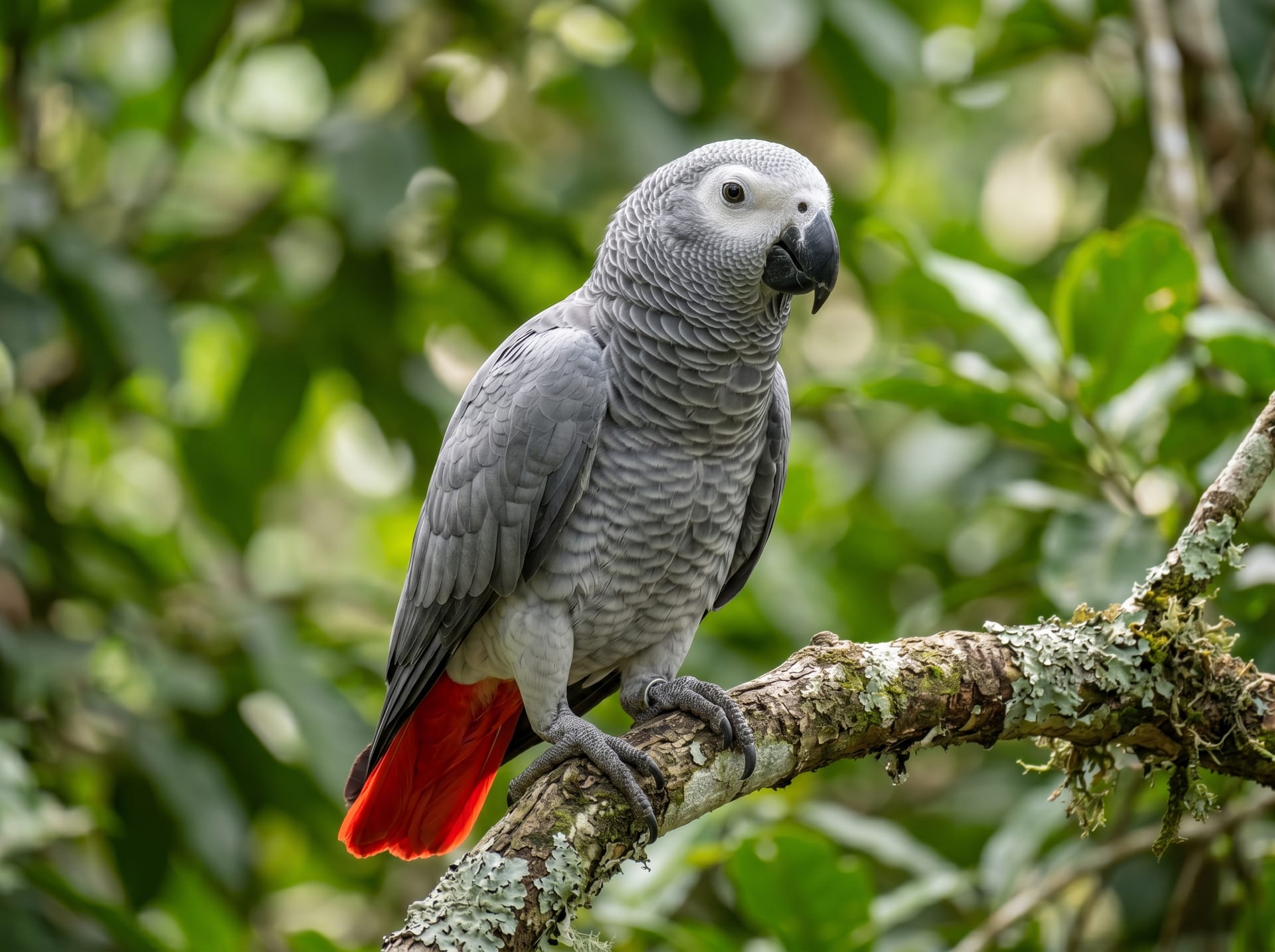
The African Grey Parrot (Psittacus erithacus) is a medium-sized bird of the order Psittaciformes, family Psittacidae, that inhabits the tropical rainforests of West-Central Africa . It measures approximately 33 cm in length and weighs 400-600 g, characterized by its gray plumage and bright red tail feathers. Its intelligence is sometimes described as being “comparable to that of a five-year-old human child,” and Alex, an African Grey Parrot made world-famous through the research of scientist Dr. Irene Pepperberg, is known for having mastered concepts such as number and color recognition. Baby African Grey for sale
They have a very long lifespan in captivity, ranging from 40 to 60 years, and there are reports of them living even longer in some cases. Therefore, it is a bird that requires the readiness to welcome into your life as a lifelong partner. In Japan, they are not designated as a specified invasive alien species, but they are listed in Appendix I of the Washington Convention (CITES), and only individuals registered under the Species Conservation Law (individuals bred in Japan, individuals acquired in Japan before the regulations were applied, or individuals legally imported) can be bought, sold, or transferred domestically.
African Grey Parrot Personality and Characteristics
African Grey Parrots are highly sensitive and empathetic birds. They tend to become very attached to specific people and are known as birds that “form deep bonds with one person.” On the other hand, they are very susceptible to stress from environmental changes and loneliness, making mental care especially important.
Main personality traits:
- High intelligence and problem-solving ability
- Extensive vocabulary (some individuals acquire hundreds to over 1,000 words)
- The ability to use appropriate language depending on the situation (contextual understanding)
- They are very expressive and can read their owner’s emotions.
- Boredom and loneliness can sometimes lead to feather plucking behavior.
African Grey Parrots become emotionally unstable if left alone for long periods. Ideally, they should receive at least 2-3 hours of interaction (talking, playing, and free flight time) every day.
How to prepare the breeding environment
Cage Selection
A suitable cage for an African Grey Parrot needs to be at least 90cm wide x 60cm deep x 120cm high. Because African Grey Parrots are intelligent, they can learn how to open latches and doors. Choose a cage with a secure locking mechanism.
- Material: Stainless steel is ideal (zinc-plated or painted cages pose a risk of poisoning).
- Bar spacing: 2 cm or less (too wide a gap poses a risk of the head getting trapped)
- Perches: Install several pieces of natural wood (such as eucalyptus, acacia, or willow) with a diameter of approximately 3-4 cm.
Temperature/humidity control
The ideal temperature for African Grey Parrots is 20-28°C, and the ideal humidity is 50-70%. Since excessively low humidity can affect their respiratory system, use a humidifier, especially during the dry winter months.
- Be careful of sudden temperature changes throughout the season.
- Do not expose it directly to the air conditioning or heating vents.
- Maintain a temperature of around 25°C at night.
light environment
Natural light and ultraviolet (UVB) rays are essential for the health of African Grey Parrots. Allow them about 30 minutes of sunlight through a window daily, or consider installing a dedicated UVB lamp for birds. The basic lighting cycle is 12 hours during the day and 12 hours at night.
Diet and nutrition management
The diet of African Grey parrots requires particular attention because an imbalance in nutrition can easily lead to calcium deficiency (hypocalcemia) or obesity.
Recommended meal plan
| ingredients | ratio | Points to note |
|---|---|---|
| High-quality pellets | 50-60% | Choose products that are free of artificial colors and sugar. |
| Fresh vegetables and fruits | 30-40% | Diversity is important |
| Nuts and seeds | Less than 10% | High in calories, suitable as a snack. |
Examples of foods that are safe to give:
- Vegetables: Japanese mustard spinach, bok choy, broccoli, carrots, bell peppers
- Fruits: apples (seeds removed), bananas, berries, mangoes
- Protein: Boiled eggs (egg whites), boiled beans
Things you should never give:
- Avocado (contains lethal toxins)
- Chocolate, caffeine
- Leeks and onions
- alcohol
- Raw peanuts (risk of aflatoxin contamination)
African Grey Parrots are particularly prone to hypocalcemia due to calcium and vitamin D3 deficiencies. Monitor their calcium levels with regular blood tests and supplement with calcium supplements as needed.
Health management and diseases to watch out for
Hypocalcemia
One problem specific to African Grey Parrots is hypocalcemia. Symptoms include seizures, unsteady gait, and muscle tremors. Since it is more likely to occur with a pellet diet, blood tests once or twice a year are recommended.
Feather plucking
There are various causes, including psychogenic, parasitic, and allergic factors. Loneliness, boredom, and environmental stress often trigger it, and if left untreated, it can become severe. Behavioral therapy (providing toys and increasing communication) and, if necessary, examination by a veterinarian are required.
respiratory disease
Aspergillosis (a lung infection caused by a fungus) is transmitted through insufficient humidity control and contaminated food. Regular cage cleaning and providing fresh food are fundamental to prevention.
Regular health checkup
We recommend that African Grey Parrots for sale have a health checkup (physical examination, blood test, and fecal examination) by a veterinarian specializing in birds once or twice a year. While the number of veterinary clinics specializing in birds is increasing in Japan, it is best to inquire and confirm beforehand.
Discipline and communication
Training African Grey Parrots is based on positive reinforcement . Scolding or punishing them is strictly prohibited, as it can lead to strong stress responses and increased aggression.
Step-up training
” Stepping up, ” where the dog climbs onto a finger or a stick, is one of the basic commands you teach first. Reward the dog with a small amount of nuts and practice repeatedly. Parrots for sale
Conversation training
African Grey Parrots begin to learn words around 6 months to 1 year old. The key to their progress is to repeatedly speak the same phrases to them and to show exaggerated delight when they pronounce the words.
Use of toys
Foraging toys (puzzle toys where you search for food) that satisfy your pet’s intellectual curiosity are particularly effective. Rotate the toys daily to prevent boredom.
Before welcoming an African Grey Parrot
African Grey Parrots have a long lifespan of 40 to 60 years, so you need to consider who will take care of them if you pass away first. Also, they have a very loud voice, which can cause problems with neighbors in apartment buildings, for example.
Points to check before purchasing:
- Registration form under the Species Conservation Law (For African Grey Parrots listed in Appendix I, an individual registration form is required when acquiring them within Japan.)
- Checking the breeder’s living environment and health condition.
- For young birds, the transition from hand-feeding to regular feeding.
- Find a veterinarian specializing in birds in advance.
Living with an African Grey Parrot offers a rich experience unlike any other pet, thanks to their deep bond and intelligence. Please understand the need for a long-term commitment and strive for responsible pet ownership. Timneh African Grey for sale